
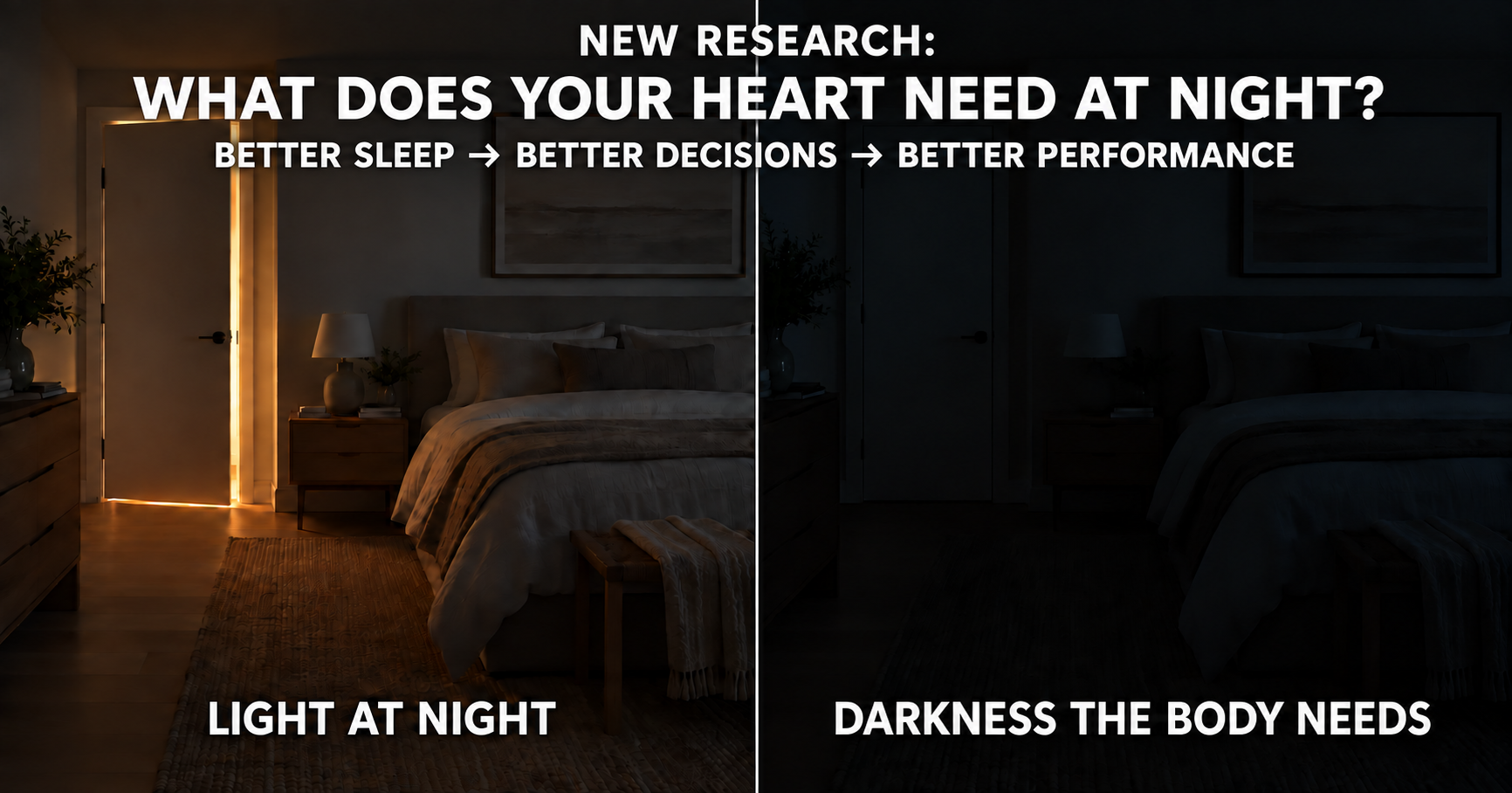
A new study of 11,071 people suggests it can, and the amount of light involved is far smaller than most of us would ever notice.
Participants wore light sensors on their wrists for a week to measure how much light reached them at night. About three years later, they underwent cardiac MRI scans so researchers could examine the structure and function of their hearts.
Three lux is roughly the low glow that might reach the bed from a very dim nightlight or light spilling through a doorway. Yet it is approximately 1,500 times brighter than a clear, moonless, starlit night.
An association between measured nighttime light exposure and measurable changes in the heart across more than 11,000 people is not something any of us, including architects and designers, can responsibly wave away.
“The small design elements add up, day after day and night after night.”
They shape our bodies, health and behavior – even our outcomes – for worse or for better.
Light from a hallway, bathroom, device, or adjoining room may seem insignificant. But night after night, the body works against it, and good design can lighten that load.
We have long understood the body’s need for properly timed light. Properly timed darkness matters just as much. It is one of the 16 Human Needs of the Built Environment, and this study brings it into measurable focus.
Darkness makes restorative sleep possible, and restorative sleep supports everything else: how we function by day, and the repair that sustains health and longevity. When we remove stress from the body, it naturally regenerates. That is “youthing.”
So the question for every bedroom we design: does it let the body do what it needs to do at night?